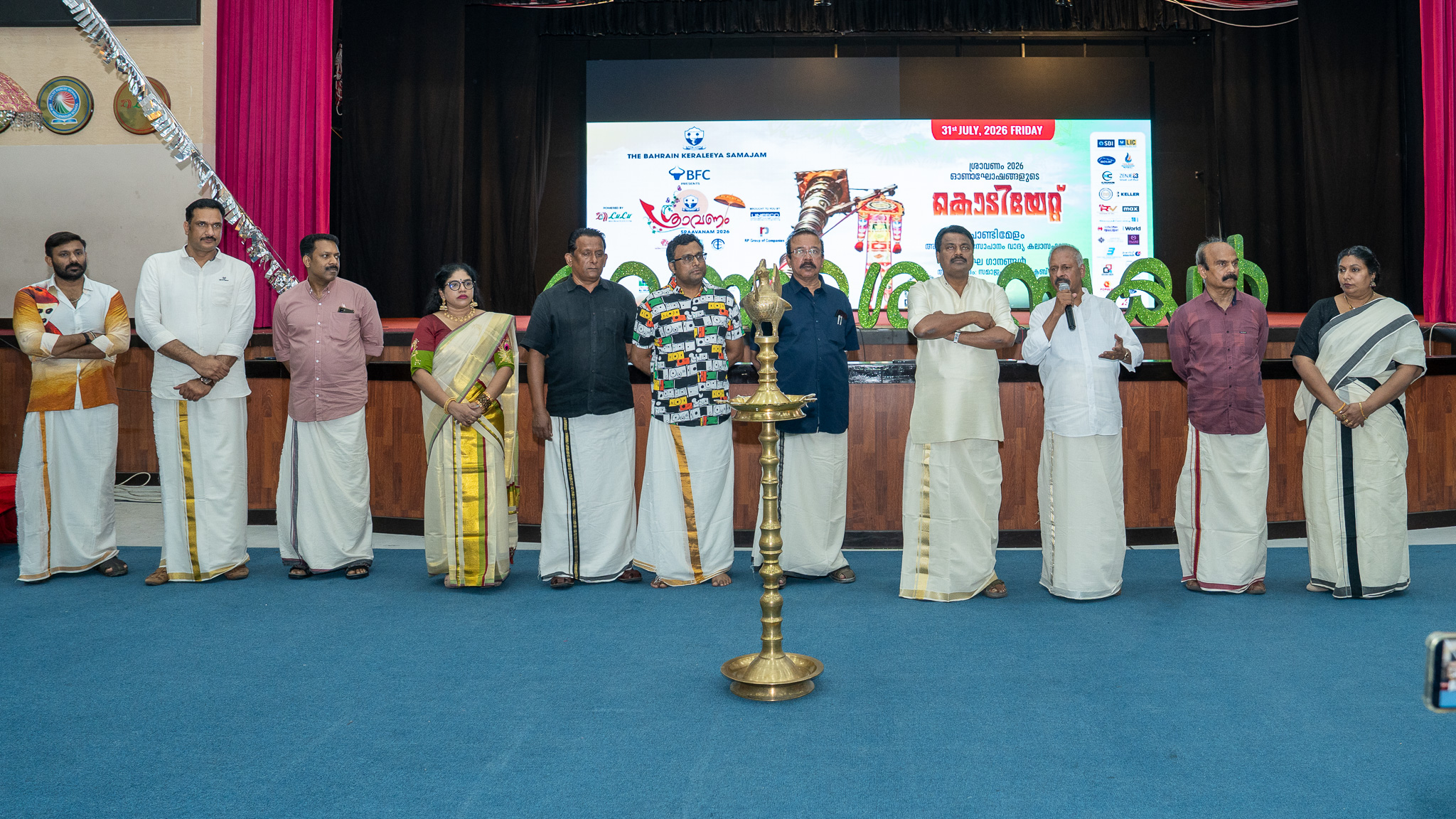
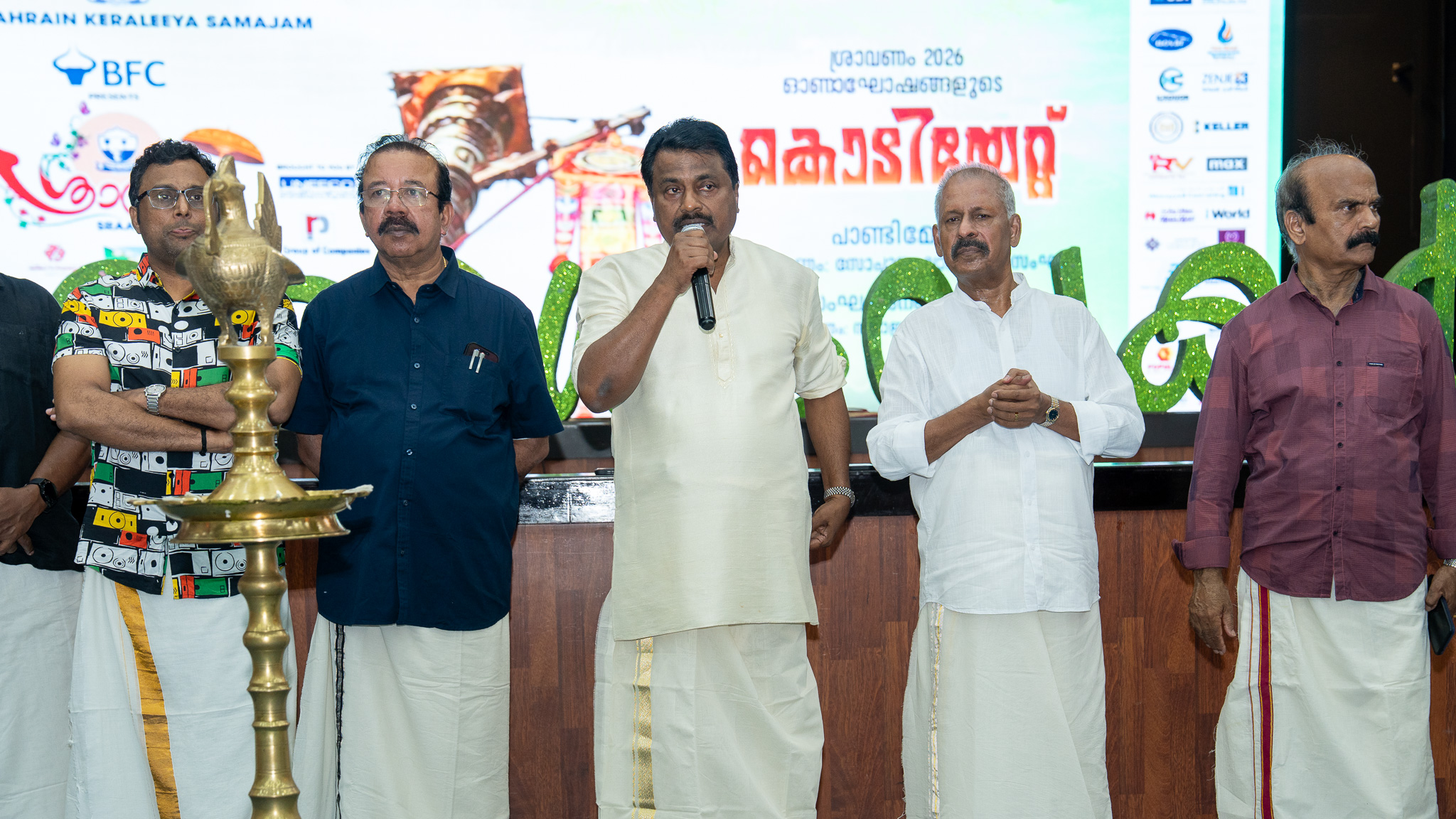
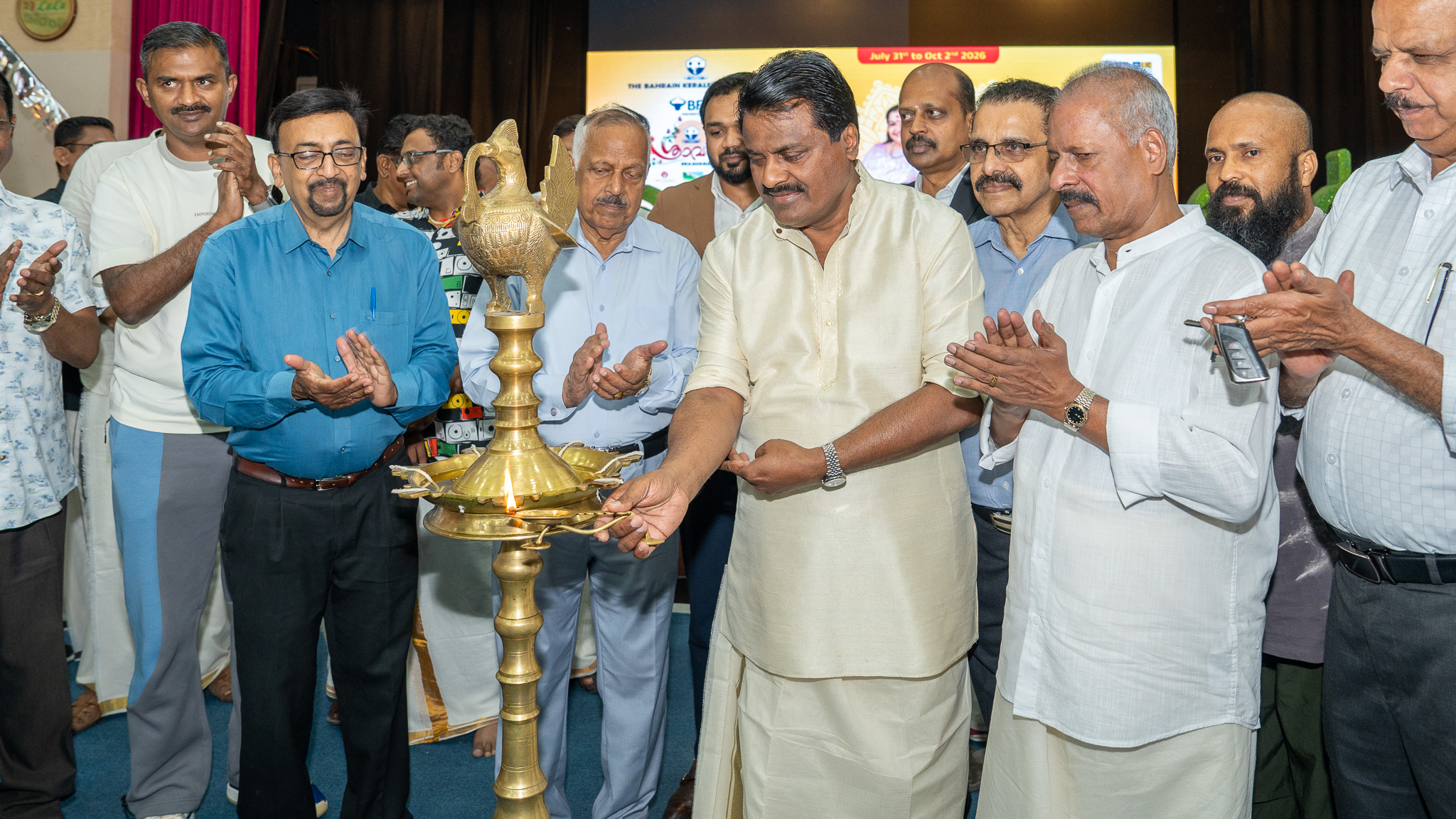
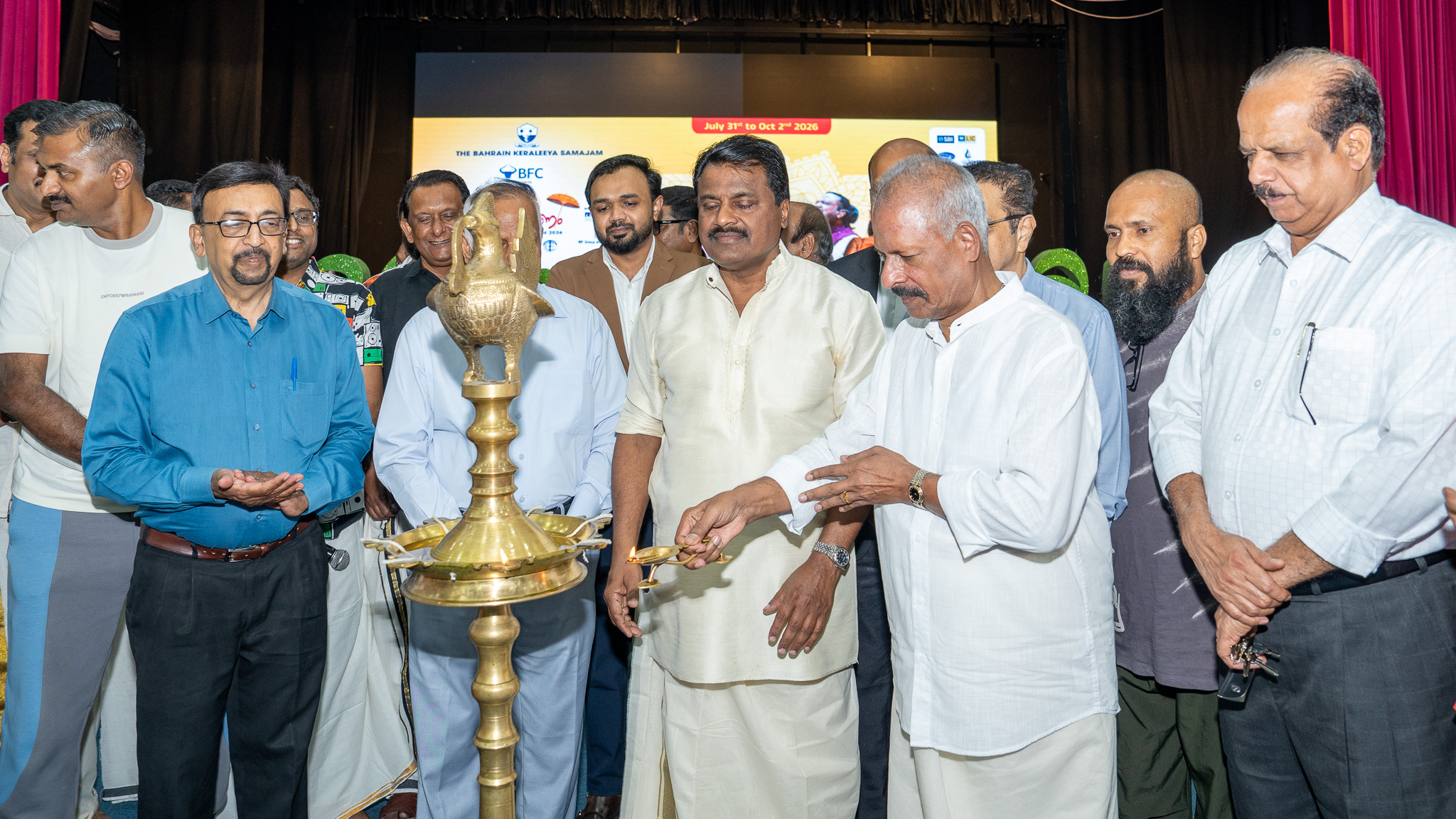
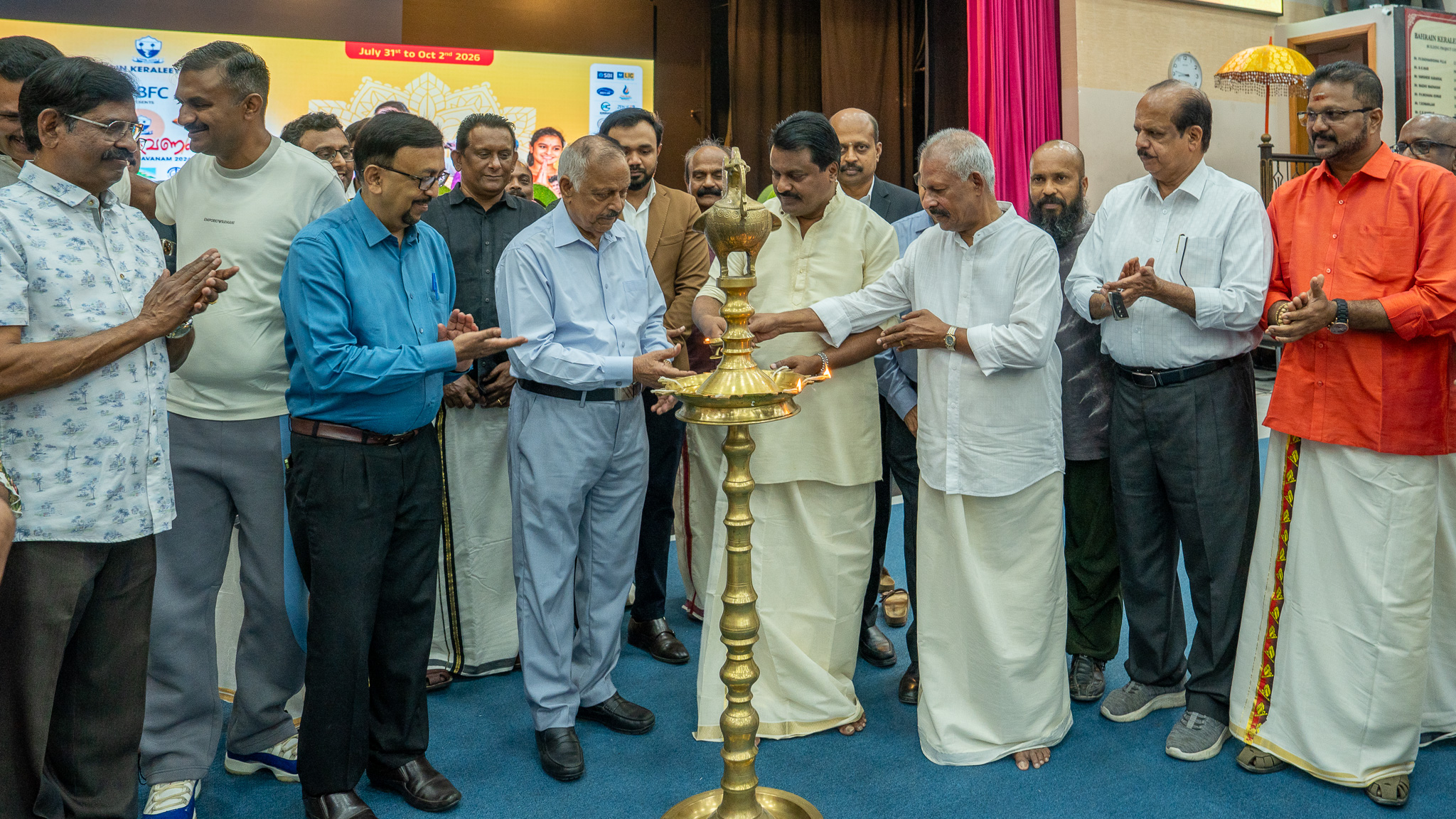
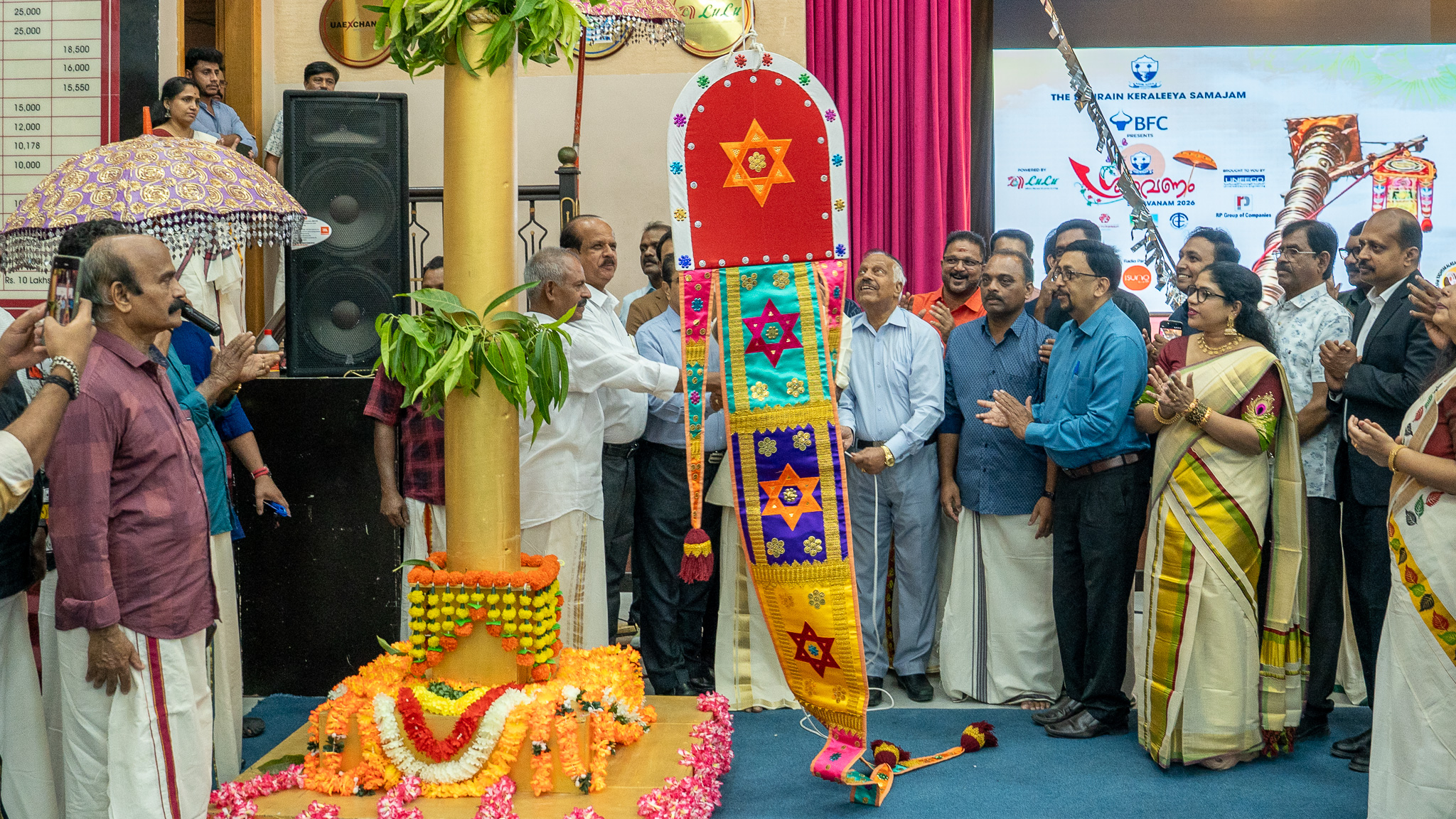
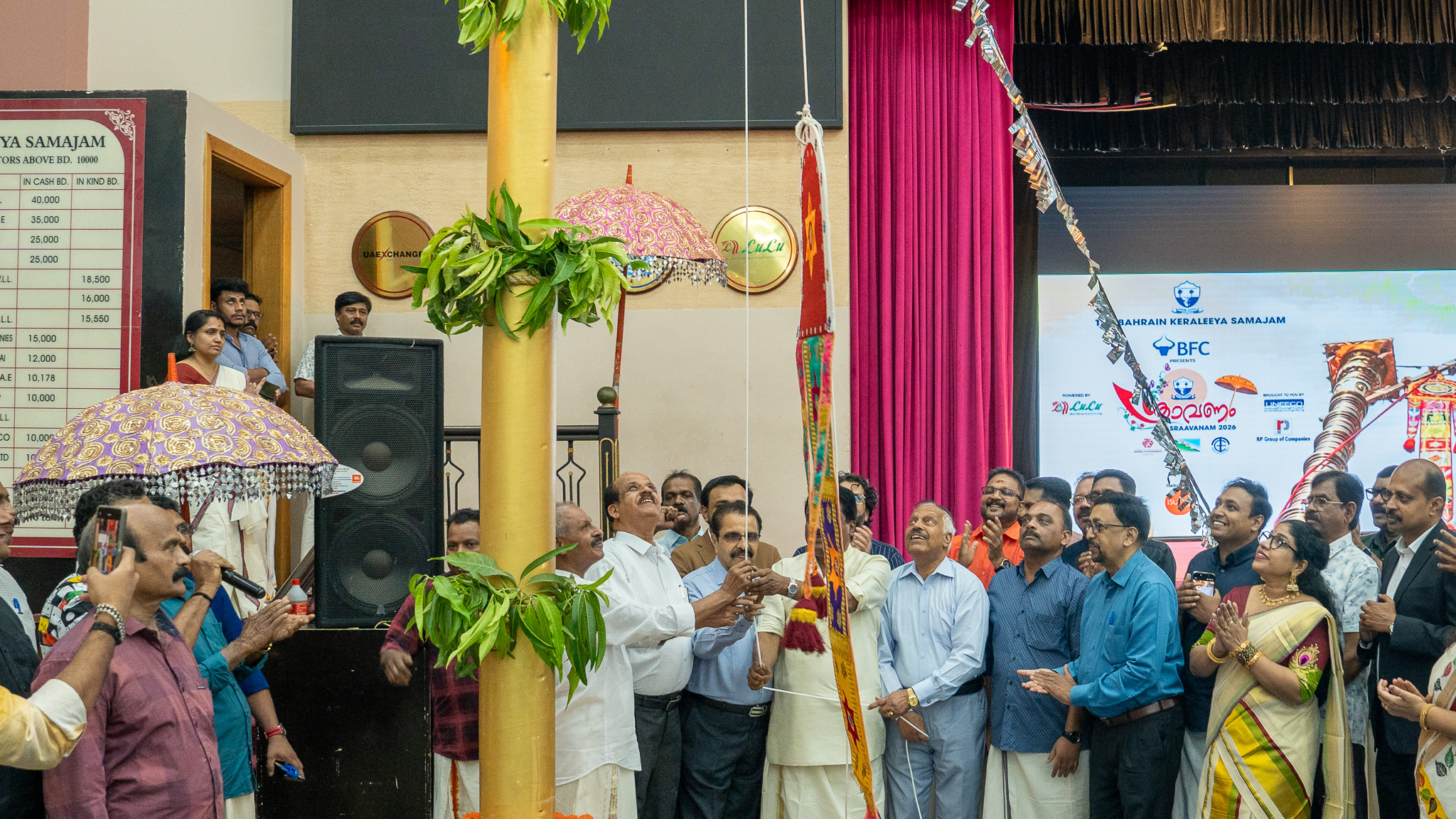
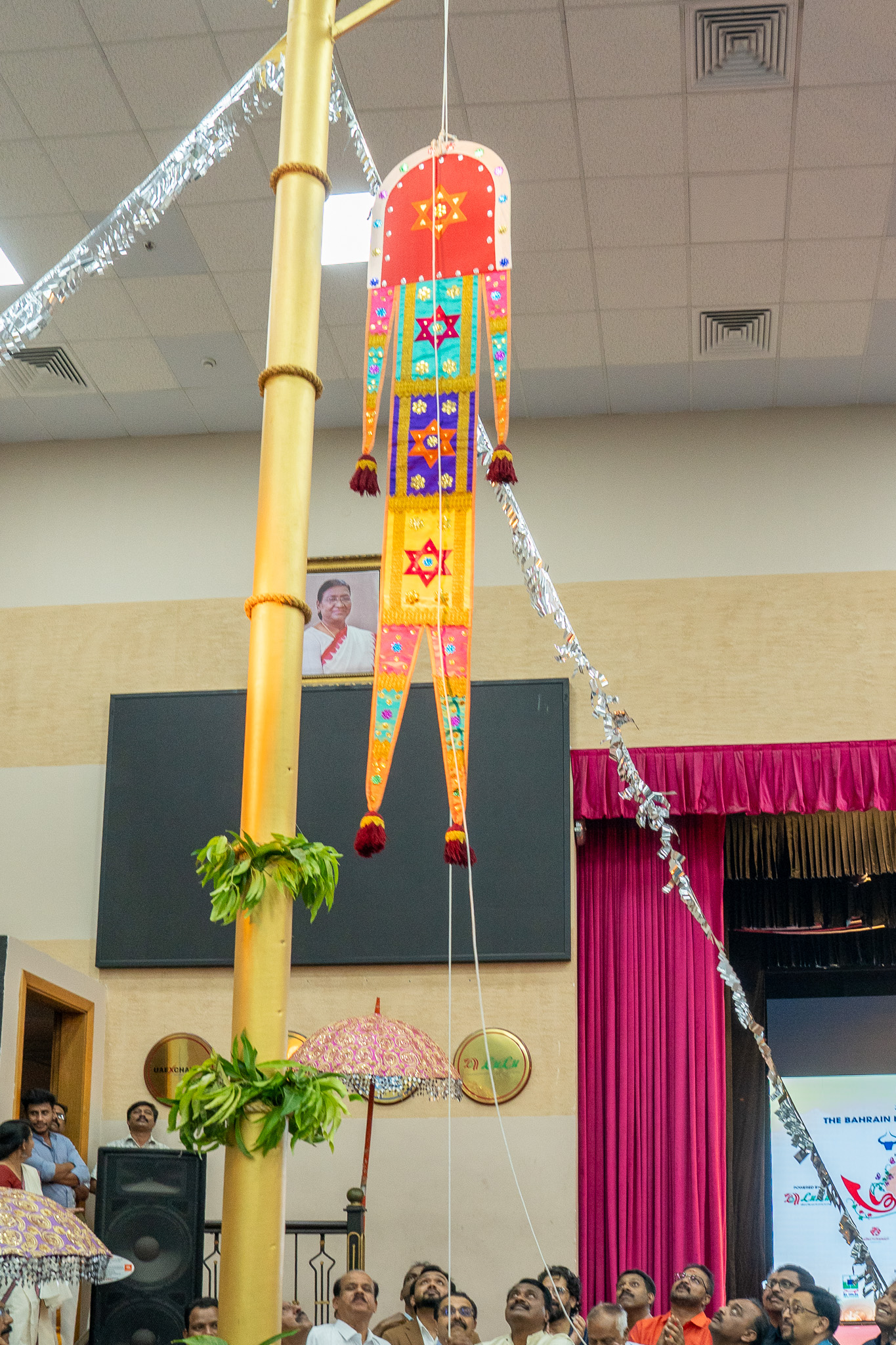
The Bahrain Keraleeya Samajam (BKS) Onam celebrations began with ceremony, symbolism and sound, as community members gathered for the lighting of the traditional lamp, the raising of the festival flag and a powerful Pandi Melam performance. Under the leadership of BKS President P. V. Radhakrishna Pillai and General Secretary Varghese Karakkal, the event marked the beginning of the Onam celebrations in Bahrain with a sense of both tradition and collective pride.
When the hall became an instrument
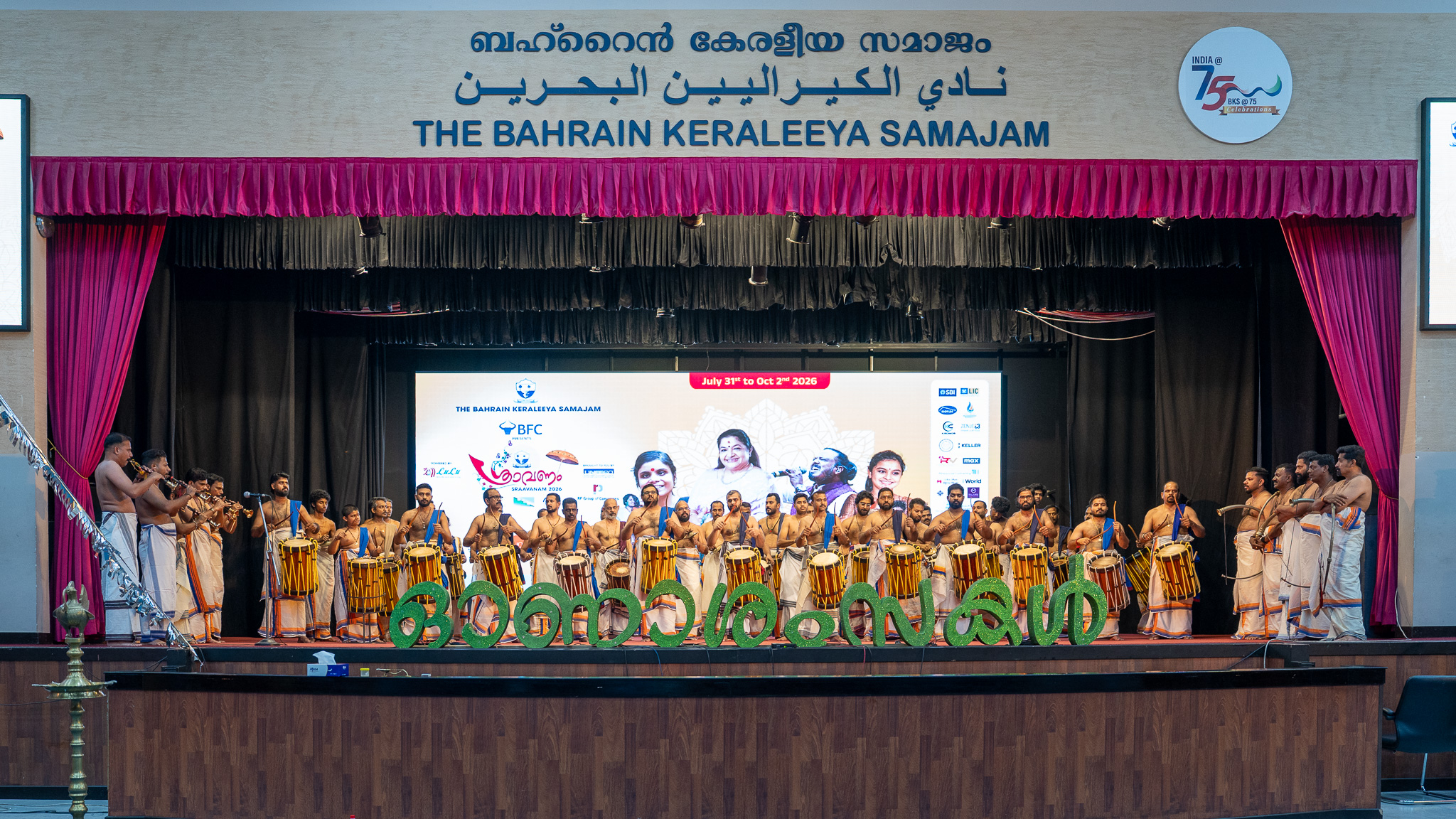
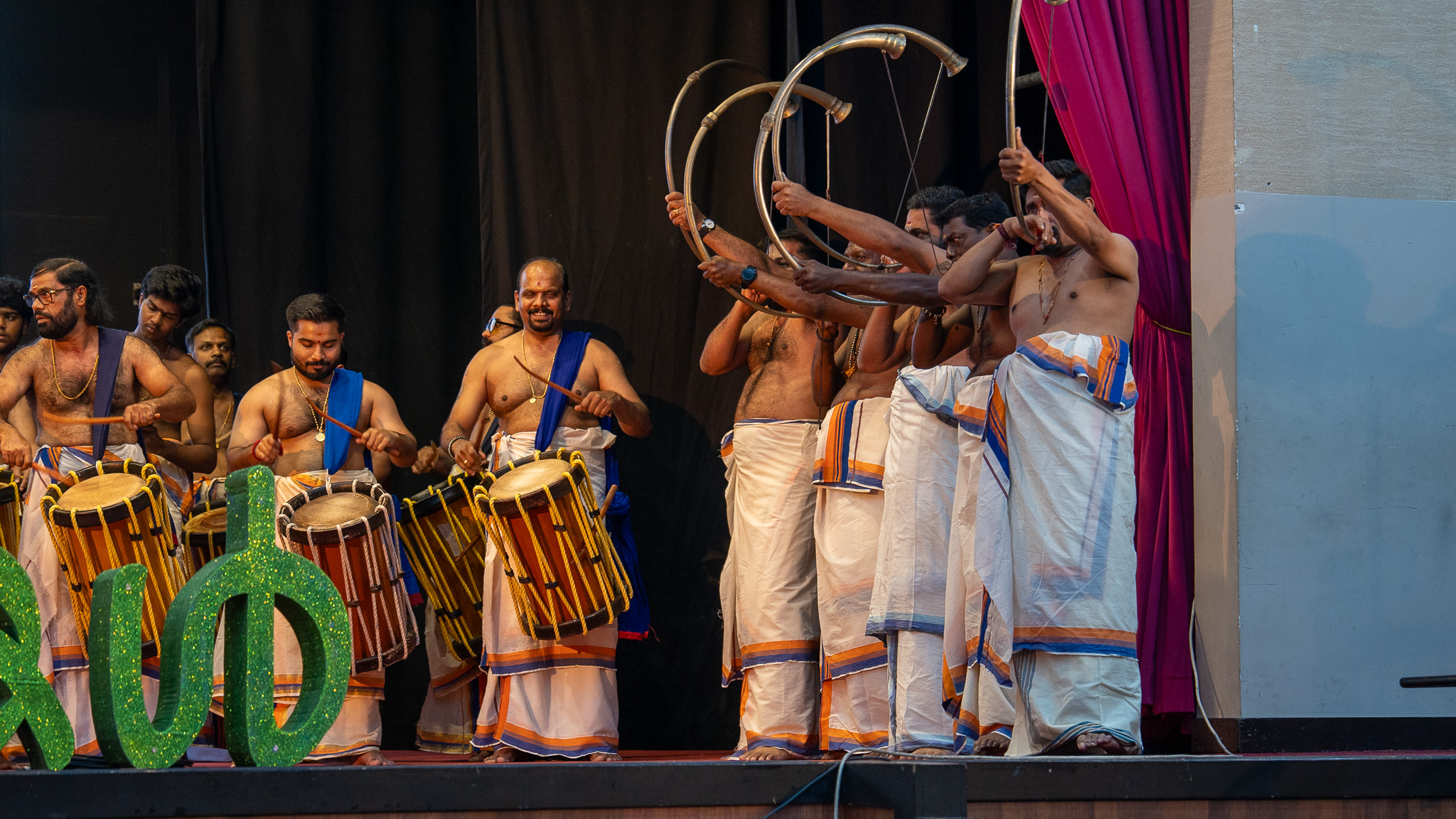
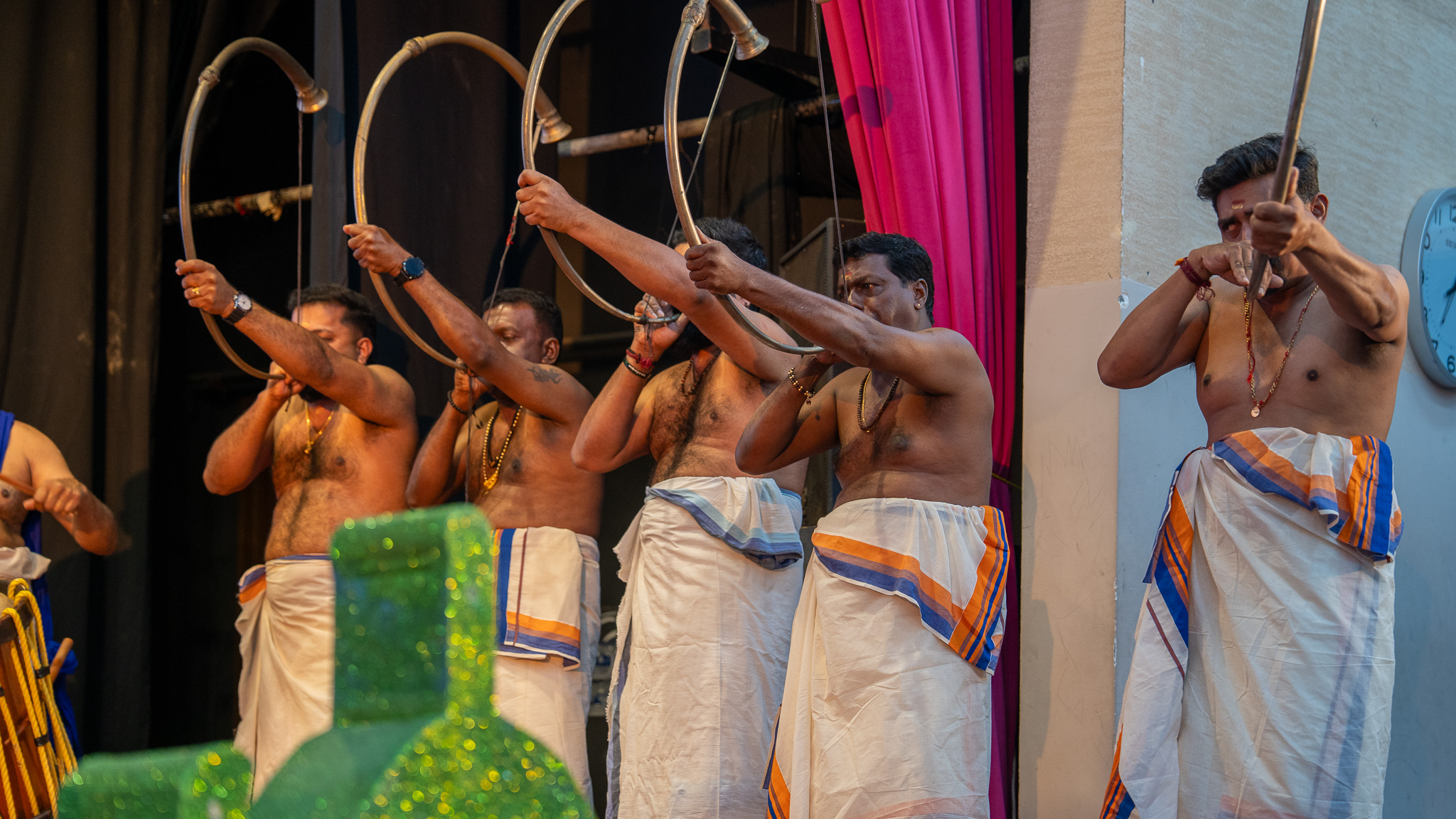
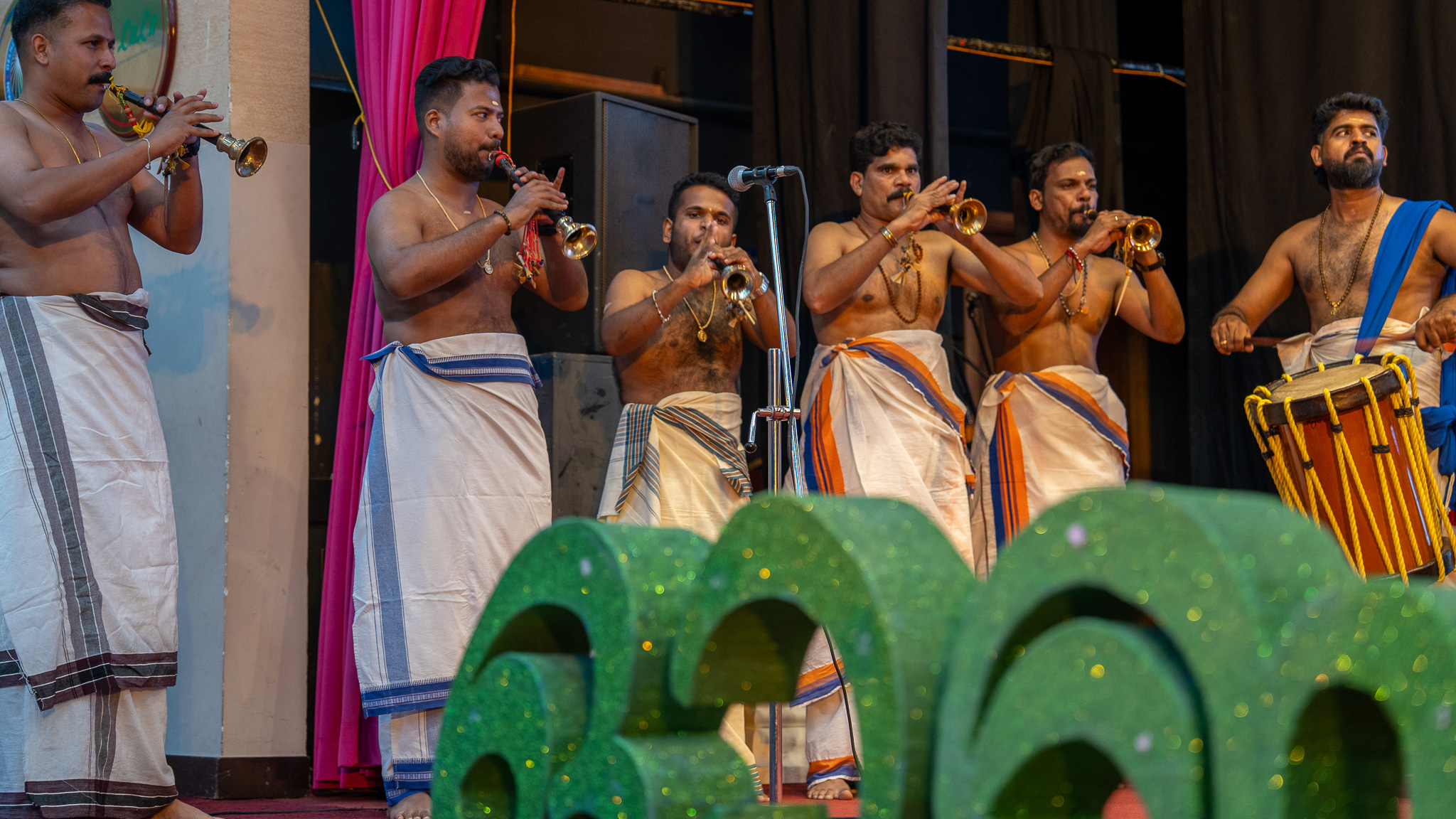
What followed was one of the evening’s most striking highlights: a large Pandi Melam ensemble performed entirely by Bahrain-based Kerala artists. With dozens of chenda drummers joined by kombu horns, kuzhal wind instruments and cymbals, the performance transformed the hall into something far larger than an indoor venue. The sound did not simply fill the room; it seemed to move through it. The rhythm rolled forward with force and discipline, building an atmosphere that felt almost elemental.
You may wonder: who is leading them?
For an outsider, an expatriate, or anyone seeing this tradition for the first time, one question naturally comes to mind: who is leading them? There is no conductor standing in front of the musicians. No baton rises above the ensemble. No obvious gesture signals the next transition. Yet the drummers shift together, the horns enter at precisely the right moment, and the entire structure moves forward with astonishing unity. That is part of what makes Pandi Melam so fascinating to watch. The leadership is there, but it is almost invisible to the untrained eye.
The conductor hidden among the drums
In this tradition, the lead comes from within the ensemble. The principal drummer, known as the Melapramani, guides the performance through rhythmic cues, accented strokes and carefully timed changes in pattern. What may sound to the audience like part of the music is, for the performers, a language of direction. The musicians are listening constantly, not only to themselves but to one another, following the structure of the composition and responding in real time. What looks spontaneous is in fact the result of discipline, memory, close listening and years of practice.
More than music: a test of endurance
That hidden structure makes the performance even more impressive when one considers its physical demands. This was not a short cultural demonstration. The musicians played for well over 90 minutes, maintaining speed, force and precision throughout. The chenda is not a light instrument, and the performance requires repeated, vigorous arm and wrist movements while standing and carrying the drum. To sustain such energy at that pace is no small feat. It is not only music; it is endurance. It is resilience shaped into rhythm. The audience witnesses spectacle, but behind it lies labour, concentration and stamina.
The meaning of the evening grew deeper because these were not visiting performers brought in from Kerala for the occasion. They were local artists living in Bahrain, preserving and presenting one of Kerala’s most demanding and iconic traditions within their own c
ommunity abroad. That matters. It turns the performance from entertainment into continuity. It shows how culture survives: not merely through memory, but through practice; not only through celebration, but through commitment.
The opening ceremonies themselves carried their own significance. The lighting of the brass lamp brought a sense of solemnity and auspicious beginning, while the raising of the Onam flag signalled the formal start of the festive season. These gestures may appear simple, but they hold symbolic power. They mark the moment when a gathering becomes a celebration, when a programme becomes a season, and when memory becomes shared experience.
What Onam means
For readers less familiar with the festival, Onam is Kerala’s major harvest celebration and one of the most important occasions in Malayali culture. It is observed during the Malayalam month of Chingam and is associated with abundance, renewal and homecoming. Traditionally, the festival unfolds over ten days, with communities decorating spaces, wearing traditional attire, sharing festive meals and taking part in music, dance and cultural programmes. At its heart lies the beloved legend of King Mahabali, the generous ruler whose reign is remembered as a golden age of justice, prosperity and equality. According to tradition, Mahabali returns once each year to visit his people, and Onam is the joyful welcome prepared in his honour.
That story gives the festival its emotional depth. Onam is not only about festivity; it is also about remembering an ideal — a world in which prosperity was shared and dignity belonged to all. This is why its symbols resonate so strongly, especially among Malayali communities living far from Kerala. The flowers, the rituals, the music and the gathering itself are not decorative details; they are a way of carrying belonging across distance.
Kerala’s rhythm, alive in Bahrain
At the Bahrain Keraleeya Samajam, that belonging was unmistakable. The lamp was lit. The flag was raised. The drums began. And for more than 90 minutes, the pulse of Kerala beat powerfully in Bahrain. For those familiar with Pandi Melam, it was a stirring affirmation of heritage. For those encountering it for the first time, it was an introduction to a tradition where leadership travels through rhythm, many performers move as one, and culture reveals itself not in explanation alone, but in sound.
In the end, perhaps that was the evening’s most memorable lesson. You may arrive wondering who is leading them, but you leave understanding that in Pandi Melam, the answer is woven into the music itself.
The opening of the BKS Onam celebrations showed how Kerala’s traditions continue to live, evolve and bring communities together in Bahrain.
Discover more stories about Bahrain’s communities, cultural traditions and the people who keep them alive on WhoDoesWhat.tv.